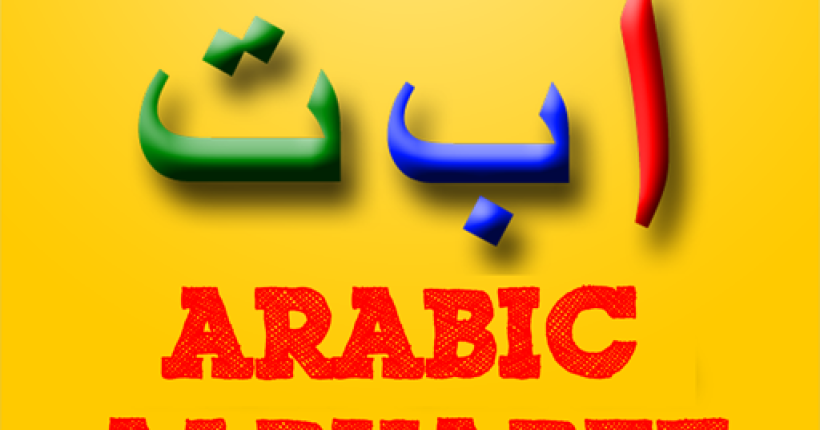
You open a language app on a Sunday night, type in “Arabic,” and stare at a swirl of letters that seem to connect to each other in ways nothing in your native alphabet ever did. By Wednesday you’ve collected fourteen words you can’t remember how to pronounce. By Friday the app notification just says “come back,” and you don’t.
It is the standard pattern for almost any person who wants to learn basic Arabic online without any preparation at all.
Word lists are productive when you study them, but they quickly become outdated due to lack of coherence. Flashcards repeat words which you more or less know already and ignore those words which you needed today, and all beginning guides offer you dozens of words without any pattern or prioritization of some of them.
The following article suggests a new approach, the path which will let you learn your first 50 words of Arabic in one week with the right organization of your words in memory and pronunciation skills which will not allow them to get lost in ten days. No knowledge of the script and no memorization of grammar is required for that.
Why Fifty Words Is the Right Number to Start With?
Fifty sounds small next to the claims some apps make about thousands of words. That’s the point. A beginner brain can hold a new sound system, a new script direction, and a long vocabulary list only so well at the same time, and something usually gives.
Fifty high-frequency words, chosen well, cover greetings, numbers, family terms, and the handful of verbs that show up in almost every beginner sentence. That’s enough to string together short exchanges within a week, which does more for motivation than a longer list you half-remember.
There’s a second reason fifty works. Arabic has well over 120,000 words in total, so no beginner list was ever going to be complete. The goal for week one isn’t coverage. It’s momentum you can build on.
The Alphabet Question Nobody Answers Honestly
Most guides either skip this question or answer it with a flat “learn the alphabet first,” which stalls a lot of beginners before they’ve said a single word out loud. The honest answer is more useful: you can start speaking words from day one using a transliteration (the Latin-letter spelling of the sound), while you build alphabet recognition in parallel rather than as a prerequisite.
Arabic script does complicate this a little. Some letters change their shape depending on whether they appear at the beginning, middle, or end of a word, and that trips up a lot of new learners who expect one letter to always look the same. Knowing this in advance removes a lot of the “am I doing this wrong” panic in week one.
The practical move is to say the word out loud from its transliteration on day one, then look at the actual Arabic spelling of that same word on day three or four, once a handful of letters have become familiar. Sound first, script layered on shortly after. Reversing that order is where a lot of beginners quietly give up.
Your Seven-Day Word List, Broken Down by Day
Spreading fifty words across a week, grouped by theme, gives your memory something to hang each word on instead of a flat list. This isn’t the only valid grouping, but it follows the order most beginners find sentences forming naturally.
| Day | Theme Approx | Word Count
|
| Day 1 | Greetings and courtesy words | 7 |
| Day 2 | Numbers 1–10 | 10 |
| Day 3 | Family terms | 7 |
| Day 4 | Everyday objects and places | 8 |
| Day 5 | Common adjectives (big, small, good, new) | 6 |
| Day 6 | Basic verbs (go, eat, want, need) | 6 |
| Day 7 | Review and short combinations | 6 |
A word like “sadiq,” meaning friend, or “a’ilah,” meaning family, isn’t just vocabulary on this list. Words like these point to how central social connection and community are in how Arabic is actually used day to day, which is worth knowing before you start dropping them into sentences.
By day seven you’re not learning new words anymore. You’re combining Monday’s greeting with Tuesday’s number and Wednesday’s family word into something close to a real sentence, which is usually the first moment the language stops feeling abstract.
What Makes Words Stick After Day Seven?
The list gets you to fifty words. What happens between day eight and day thirty determines whether those words are still there in a month, and this is where most self-taught beginners lose ground without noticing.
Spaced repetition is the least glamorous and most effective tool available here. Reviewing a word right when you’re about to forget it, rather than reviewing everything daily out of habit, is what actually moves a word from short-term recall into long-term memory. A simple physical flashcard deck sorted into “today,” “in three days,” and “next week” does this job as well as most paid apps.
Speaking the words out loud matters more than most beginners expect going in. Practicing regularly and using resources to work on pronunciation specifically closes a gap that silent reading review never touches, because Arabic includes a few sounds that simply don’t exist in English and your mouth needs repetition to find them.
The words that stick longest tend to be the ones you used in an actual exchange with another person, even a short one. Reading a word is one kind of memory. Using it to be understood by someone else is a different, stronger kind.
Where Guided Instruction Changes the Curve?
Self-study gets a motivated beginner through the first fifty words. It gets harder to sustain once pronunciation errors go uncorrected and nobody’s checking whether “Fatha” and “Kasrah,” the short vowel marks that change how a word sounds, are actually landing right in your mouth.
This is the gap that is intended to be bridged by a structured beginners’ class. A well-designed beginners’ reading course for example teaches the learner how to recognize letters, short vowels, long vowels, and the marks that indicate when a letter should be doubled, all in the presence of a live teacher and not an app making a guess at your progress.
It has nothing to do with willpower. It’s about having someone catch the small pronunciation habits that self-study lets slide for months before they’re hard to unlearn. A guided beginner path and a self-built one-week word list aren’t competing methods. They work well stacked together, one giving you early momentum and the other giving you correction before mistakes settle in.
FAQ
How long does it take to learn the basics of Arabic language?
Basics of conversation which will allow you to say hello, hold some short talks and use some vocabulary can be learned within several months of regular learning sessions. Reading and writing, however, are more complicated tasks.
Is it hard for English speakers to learn Arabic?
It is said to be relatively harder than Spanish or French languages due to the difficulty in the script and pronunciation of the words, but not due to the structure of the grammar which is fairly easy in the beginning of the first fifty words.
What are the easiest Arabic words to learn?
Greetings, numbers from one to ten, and family members’ names are among the easiest words to learn as they are short, frequent, and helpful in conversation.
Do I need to know the alphabet first before learning Arabic vocabulary?
No. Learning pronunciation first and then gradually learning the script within the first week or two is the right method than using the alphabet as the gateway to vocabulary.
Can you really learn Arabic in one week?
A first meaningful vocabulary together with proper pronunciation can be learned in a week’s time. However, fluency may take years, and anything short of that from any source is exaggeration.
Which is the most effective way of learning Arabic online for beginners?
The most effective way is a combination of different techniques, including using a group word list to build up initial momentum, using oral practice to get a hang of pronunciation, and taking a course.
Conclusion
Fifty words in a week is a real result, not a token gesture. Most beginners who reach day seven with those words intact are already ahead of where they were a week earlier, and that’s worth noticing before rushing straight into word fifty-one.
What’s less obvious is that week two rarely fails because of new vocabulary. It fails when nobody checks whether week one’s words are still pronounced correctly, or whether “Fatha” and “Kasrah” have quietly started blending together in your head. That’s usually the moment a self-taught path either finds structure or starts losing words it already earned.
Start building a stronger foundation with the Arabic for Beginners Course, designed to take you from your first letter to confident reading, step by step.